Blog

Mechanical Seals: The Unsung Heroes of Modern Industry

Look around you: the water from your tap, the fuel in your car, the chemicals in everyday household products—their journey from source to your home relies on a critical yet nearly invisible component: the mechanical seal. Tucked inside pumps, mixers, and compressors, these precision devices perform a quiet but vital role: stopping leaks. In a world dependent on moving fluids, they’re the unsung guardians of efficiency, safety, and environmental protection.

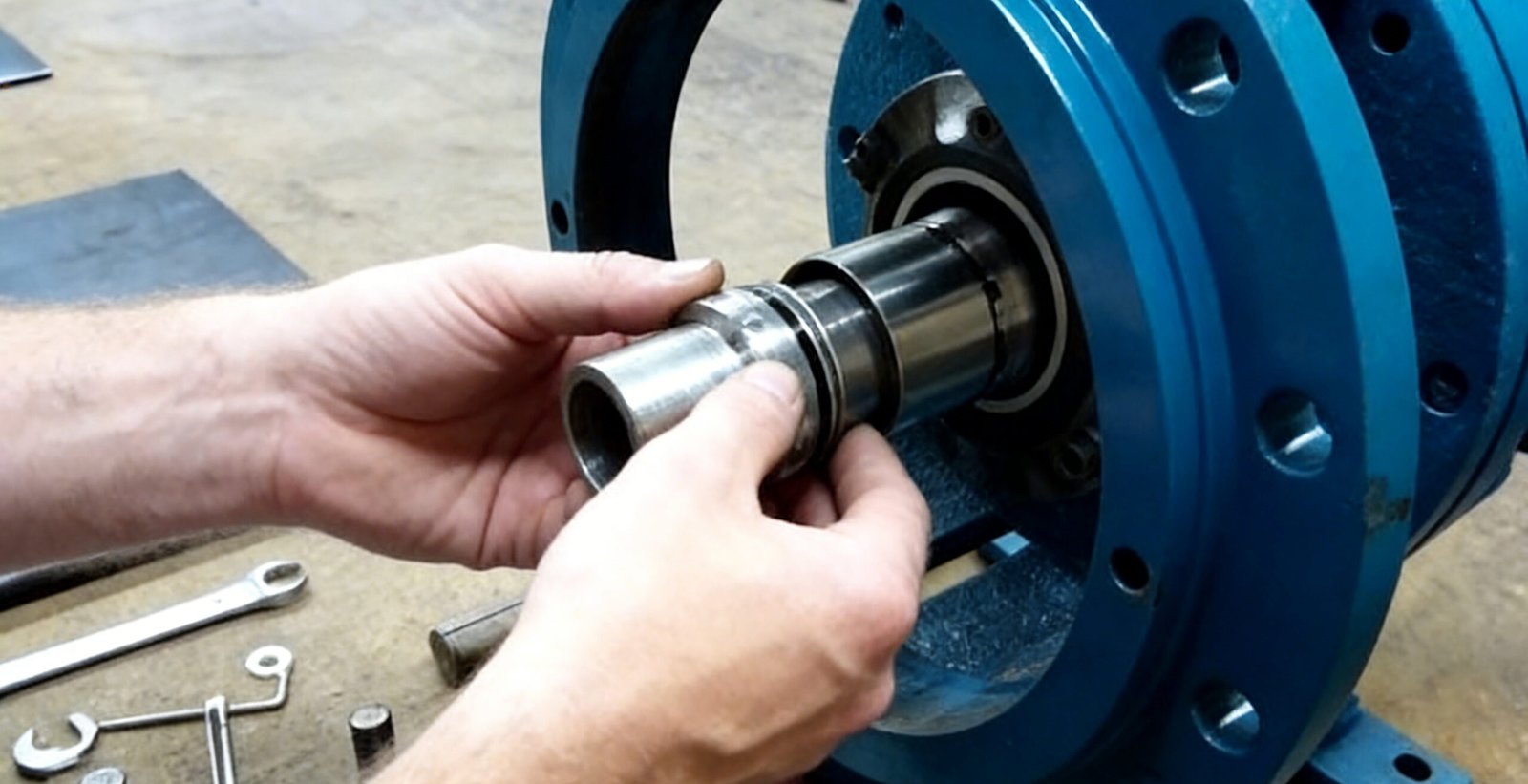
So, what exactly is a mechanical seal? At its core, it’s a sophisticated solution to a simple problem: how to let a rotating shaft enter a pressurized fluid chamber without letting the fluid escape. Old-school fixes like gland packing (compressed rope-like material) were inherently leaky—requiring constant adjustments and wasting valuable resources. Mechanical seals, by contrast, are engineered for near-zero leakage.

The principle is elegantly simple. Picture two ultra-flat, highly polished rings: one rotates with the shaft (the primary ring), and the other stays fixed in the pump housing (the mating ring). Precise spring force presses these faces together, creating a microscopic sealing gap—thinner than a human hair. The pumped fluid itself forms a lubricating film in this gap, reducing wear and heat buildup. This dynamic seal between the two rings is the heart of the device. Auxiliary elastomeric seals (O-rings, bellows) handle static sealing between the rings and the shaft or housing.

What makes mechanical seals brilliant is their adaptability—they’re not one-size-fits-all. A basic seal with carbon and ceramic faces works for pumping water, but industry demands far more: corrosive acids, abrasive slurries, cryogenic liquids, or ultra-hot hydrocarbons. That’s where seal engineering becomes high-tech. Metallurgists select exotic alloys like Hastelloy or titanium; material scientists deploy silicon carbide, tungsten carbide, or diamond-coated faces. Designs evolve too: double seals with pressurized barrier fluids for lethal chemicals, cartridge seals for easy installation, and gas seals that use a micro-thin layer of air or nitrogen for dry, clean operation.

Why does this matter? The impact is huge, spanning three key areas:

First, environmental stewardship. Seals prevent chronic, dripping leaks of toxic or volatile fluids, protecting soil and groundwater. In an age of strict regulations, a reliable seal isn’t just a legal requirement—it’s an ethical one.

Second, economic efficiency. Leaks mean lost product: imagine a refinery wasting barrels of crude or a food plant losing valuable ingredients. Efficient seals conserve resources and cut costs.

Third, safety and reliability. A catastrophic seal failure in a pump handling hot oil or explosive gas can be disastrous. Robust seals are foundational to preventing fires, explosions, and toxic releases—keeping operations running and protecting workers.

From deep-sea oil platforms to sterile pharmaceutical labs, from local power plant pumps to paint factory agitators, mechanical seals are indispensable. They’re a masterpiece of precision engineering: a fusion of materials science and fluid dynamics working in perfect harmony. They operate unseen, unheralded, under extreme conditions—asking only for proper selection and installation.

Next time you turn on a faucet or fill your gas tank, take a moment to appreciate the invisible, intricate dance of two perfectly flat rings, spinning under pressure to hold the line. They’re a quiet tribute to human ingenuity—the ultimate guardians of the fluid world. In the grand symphony of industry, mechanical seals play the essential, silent note that keeps everything else flowing smoothly.